


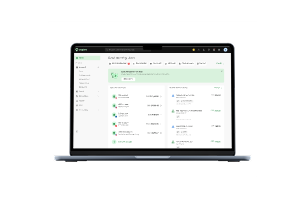
Exploring the top expense management software in Singapore
SAP Concur
SAP Concur is designed for organisations that need enterprise-grade expense and travel management. Alongside receipt capture, it provides policy controls, audit trails, compliance workflows, and global travel booking integration. It suits companies that have frequent employee travel, complex reimbursement processes, or strict compliance requirements.
Its global coverage can also help companies operating across several countries standardise their expense reporting, tax documentation, and policy enforcement. The main drawbacks of Concur are the cost and implementation time. In cases of larger deployments, you may also require onboarding support and changes to existing finance processes.
Zoho Expense
Zoho Expense is a convenient option for mid-sized businesses looking for lower-cost expense automation, especially those already using Zoho accounting, CRM, or payroll as the tools sit within the same ecosystem.
The platform also includes mobile expense submission, OCR receipt scanning, mileage tracking, and approval workflows. Teams may need a higher tier or another tool once they require more advanced spend forecasting or broader finance capabilities.
Zoho Expense makes the most sense if you're a small or mid-sized team already inside the Zoho ecosystem, or you're formalizing expense processes for the first time and don't want to overpay for features you won't use yet.
Coupa
Coupa manages company-wide spending, including employee reimbursements. Its expense tools use OCR and direct integrations in order to reduce manual data entry. This way, employees can scan receipts and have the relevant information extracted automatically.
Coupa also links expense management with procurement and payments, allowing businesses to view travel, supplier, and operational spend in one dashboard. Its controls can flag duplicate claims, out-of-policy expenses, and potential fraud. The platform also supports VAT tracking, per diems, virtual cards, and direct bank reimbursements.
Coupa's expense and procurement data live on one dashboard, so finance teams see supplier, travel, and operational spend together. Implementation takes longer, though, for organisations with a complex spending structure.
Coupa justifies its complexity in cases of:
- Large organisations with over 500 employees
- Regional or multi-entity businesses
- Companies with high travel and supplier spend
- Businesses that require strong budget control and audit visibility
Airwallex
Airwallex pairs multi-currency accounts and corporate cards with expense management, including receipt capture and approvals. Its free Explore plan includes spend management. Grow costs SGD $79/mo, while Accelerate starts at SGD $399/mo.
Airwallex is a strong fit if most of your spend crosses currencies. Its FX markup is 0.4% above interbank rates for major currencies and 0.6% for all other currencies. Cards, expenses, and multi-currency accounts all sit under one login instead of being stitched together from separate tools.
Volopay
Volopay is a card-led spend platform featuring corporate cards, multi-level approvals, receipt OCR, and accounting sync. Pricing is quote-based and tied to card-spend volume, so it’s more relevant to teams that expect to put significant company spend through corporate cards.
Volopay is worth a quote-based conversation once your team is ready to run real volume through corporate cards and wants spend controls tied directly to accounting sync.
Expensify
Expensify focuses on receipt scanning and offers unlimited SmartScans on its free plan, making it a reasonable starting point for freelancers and lean teams. It also offers its own cards and syncs with Xero and QuickBooks. Its pricing is only available in USD $, GBP £, AUD A$, NZD NZ$, and EUR €, and its SG-specific GST presets are limited, so it’s a better match for simpler workflows.
QuickBooks Online
QuickBooks Online is an accounting platform that comes with built-in expense tracking, GST handling, and receipt capture. If you already use it for your books, those native expense features may cover basic needs. Cards and approval workflows can be added through integrations if you need them later.
QuickBooks Online works well if you need SG GST tracking built into your ledger, plan to add cards or approvals through integrations later, or simply prefer to stay on an established accounting platform.
Xero
Xero is an accounting platform where expense claims are handled through the Xero Expenses add-on. It supports SG GST returns and IRAS-aligned reporting. Businesses that need more than basic claims can pair Xero with a dedicated card or spend tool.
If your books already live in Xero, adding Expenses can be a straightforward way to keep employee claims connected to your accounting workflow. Separately, check whether your Xero setup is InvoiceNow-ready if your business will be affected by the GST InvoiceNow Requirement.
Aspire
Aspire combines expense management with corporate cards, payroll, budget management, payables, and finance visibility in one platform. Companies can manage cards, expenses, and payment workflows from the same dashboard.
It also provides real-time spend tracking across employee cards and expense claims, automated reconciliation, policy-based spending controls, and multi-currency support. These features are relevant to digital-first businesses, SaaS companies, and regional businesses that manage spending across currencies and vendors.
Aspire is a stronger fit than a standalone expense tool when you want expenses, corporate cards, reimbursements, and business payments in the same platform. Aspire tends to fit small businesses formalising their finance processes for the first time, and startups with distributed or remote teams that need one login instead of five. It's also a reasonable landing spot for regional businesses juggling multiple currencies, or any growing company that finds the enterprise players more complexity than it's ready for.
What should you look for when choosing the right spend management software for your business
When comparing expense management solutions, check the areas below:
Best expense management software in Singapore: our recommendations
Singapore-specific factors to consider before choosing
GST and IRAS record-keeping
The expense system should capture GST at the transaction level and keep digital records that satisfy IRAS, which expects supporting records to be retained for at least five years. The system can also code GST automatically and sync it to your ledger, such as Xero or QuickBooks. That's one less manual step come quarter-end.
InvoiceNow readiness
InvoiceNow is Singapore’s national e-invoicing network based on the Peppol standard. IRAS is phasing in the GST InvoiceNow Requirement from 2025 to 2031. It applies to new voluntary GST registrants from 1 April 2026, while the rollout to existing GST-registered businesses runs from April 2028 to April 2031 based on annual supplies. Check whether the software supports InvoiceNow, especially if your business will be affected by the GST InvoiceNow Requirement as the rollout continues. The Government has also announced transitional funding of up to SGD $1,000 for small businesses and up to SGD $5,000 for larger businesses to offset InvoiceNow onboarding costs.
The PSG grant can offset the cost
Some pre-approved accounting and expense solutions may qualify for the Productivity Solutions Grant (PSG) if your business and the solution meet the eligibility requirements. The grant covers up to 50% of qualifying costs for pre-approved solutions, capped at SGD $30,000 per company per financial year. It’s administered by Enterprise Singapore through the Business Grants Portal. You must apply for the PSG before making any payment or deposit to the vendor. If the application is approved, you can proceed with the purchase and claim the eligible amount after paying for and using the solution. Check the current pre-approved list before you buy.
PSG is being consolidated with other business support schemes into the new EDGE scheme, which is expected to launch in the second half of 2026. Check the latest Enterprise Singapore guidance before applying, as scheme availability and eligibility may change.
Conclusion
The best choice depends on what your business needs from expense management solutions. A smaller team may only need expense tracking and approvals, while a business with significant travel, procurement, or multi-market spending may need a wider set of controls.
Before choosing a platform, compare its accounting integrations, GST and InvoiceNow support, approval workflows, and pricing. Also check whether it fits the way your finance team handles expenses today.
Keen to learn more about how Aspire can help you improve your organisation's financial operations and streamline workflows? Talk to our sales team today, or sign up for free to get started.
Frequently asked questions
Is there free expense management software in Singapore?
There are a handful of free options for expense management solutions. Aspire's Basic plan is free, Zoho Expense is free for up to three users, and Airwallex includes spend management free on its Explore plan up to 5 users. Expensify offers unlimited SmartScans on its free plan.
How much does expense management software cost in Singapore?
Dedicated tools generally range from free to around SGD $9 per user a month for small businesses, based on the publicly listed Singapore plans covered in this comparison. Add-on accounting plans cost more (Xero Standard is SGD $70/mo, Premium SGD $95/mo; QuickBooks Online ranges from SGD $31/mo for Simple Start to SGD $124/mo for Advanced), SAP Concur publishes per-report starting prices for its lower tiers ($7–$11 per report) but its top tier and Coupa are both quote-based. Always factor in FX markups and any card-spend minimums on top of the headline price.
Does the software need to support InvoiceNow?
It’s worth checking. IRAS is phasing in the GST InvoiceNow Requirement, with the rollout to existing GST-registered businesses running from April 2028 to April 2031 based on annual supplies. Choosing an InvoiceNow-ready solution now can help you avoid changing systems later.
Can I claim a grant for expense or accounting software?
Some pre-approved accounting and expense solutions may qualify for PSG if your business and the solution meet the eligibility requirements. You must apply before making any payment or deposit to the vendor. PSG will be consolidated with other business support schemes into the EDGE scheme in the 2H of 2026. Check the latest Enterprise Singapore guidance before applying, as scheme availability and eligibility may change.
Can I use Excel to track business expenses?
Yes. Excel or Google Sheets can work when you have a low volume of expenses and simple approval needs. As transactions and approval requirements grow, dedicated expense management software reduces manual data entry, automates approvals, improves receipt tracking, and syncs expense data with your accounting system.
What's the difference between expense software and accounting software?
Accounting software (Xero, QuickBooks) is your system of record for the full ledger and GST. Expense software manages receipts, employee expenses, corporate cards, and approval workflows, then pushes clean, coded data into the ledger.
What's the best expense management software for a small, growing team?
A small team can start with a low-cost platform that covers receipt capture, approvals, and basic reporting. Zoho Expense, Aspire, and Airwallex all fit this, since each has a free or low-cost entry point and adds structure (approval workflows, multi-currency, deeper analytics) as your headcount and spend increase.
How do I manage staff travel reimbursements without corporate cards?
You can still run a structured process without issuing cards: employees submit receipts through the app, claims route to an approver automatically, and reimbursements sync to payroll or your accounting system. Tools like Zoho Expense and SAP Concur support this claims-first model. Aspire, Airwallex, and Volopay take a more card-led approach, giving businesses an alternative to employee reimbursement.
Frequently asked questions
Is there free expense management software in Singapore?
There are a handful of free options for expense management solutions. Aspire's Basic plan is free, Zoho Expense is free for up to three users, and Airwallex includes spend management free on its Explore plan up to 5 users. Expensify offers unlimited SmartScans on its free plan.
How much does expense management software cost in Singapore?
Dedicated tools generally range from free to around SGD $9 per user a month for small businesses, based on the publicly listed Singapore plans covered in this comparison. Add-on accounting plans cost more (Xero Standard is SGD $70/mo, Premium SGD $95/mo; QuickBooks Online ranges from SGD $31/mo for Simple Start to SGD $124/mo for Advanced), SAP Concur publishes per-report starting prices for its lower tiers ($7–$11 per report) but its top tier and Coupa are both quote-based. Always factor in FX markups and any card-spend minimums on top of the headline price.
Does the software need to support InvoiceNow?
It’s worth checking. IRAS is phasing in the GST InvoiceNow Requirement, with the rollout to existing GST-registered businesses running from April 2028 to April 2031 based on annual supplies. Choosing an InvoiceNow-ready solution now can help you avoid changing systems later.
Can I claim a grant for expense or accounting software?
Some pre-approved accounting and expense solutions may qualify for PSG if your business and the solution meet the eligibility requirements. You must apply before making any payment or deposit to the vendor. PSG will be consolidated with other business support schemes into the EDGE scheme in the 2H of 2026. Check the latest Enterprise Singapore guidance before applying, as scheme availability and eligibility may change.
Can I use Excel to track business expenses?
Yes. Excel or Google Sheets can work when you have a low volume of expenses and simple approval needs. As transactions and approval requirements grow, dedicated expense management software reduces manual data entry, automates approvals, improves receipt tracking, and syncs expense data with your accounting system.
What's the difference between expense software and accounting software?
Accounting software (Xero, QuickBooks) is your system of record for the full ledger and GST. Expense software manages receipts, employee expenses, corporate cards, and approval workflows, then pushes clean, coded data into the ledger.
What's the best expense management software for a small, growing team?
A small team can start with a low-cost platform that covers receipt capture, approvals, and basic reporting. Zoho Expense, Aspire, and Airwallex all fit this, since each has a free or low-cost entry point and adds structure (approval workflows, multi-currency, deeper analytics) as your headcount and spend increase.
How do I manage staff travel reimbursements without corporate cards?
You can still run a structured process without issuing cards: employees submit receipts through the app, claims route to an approver automatically, and reimbursements sync to payroll or your accounting system. Tools like Zoho Expense and SAP Concur support this claims-first model. Aspire, Airwallex, and Volopay take a more card-led approach, giving businesses an alternative to employee reimbursement.





.webp)